Addis Ababa, 2 November 2026 (ECA) – Participants at the first African Social Security Summit called for stronger social security systems and greater mobilization of long-term institutional capital to support infrastructure development and economic transformation across Africa.
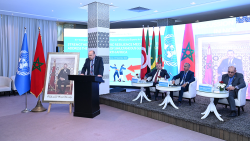
Held in Addis Ababa on 29 and 30 October 2026 under the theme “Harmonizing Social Security Systems for Infrastructure and Economic Transformation in Africa”, the summit brought together policymakers, representatives of social security institutions, regulators, development finance institutions and investment experts from across the continent.
The summit was convened by the Africa Social Security Association (ASSA) in partnership with the United Nations Economic Commission for Africa (ECA), the African Union, the African Development Bank Group, the African Union Development Agency (AUDA-NEPAD), the Africa Finance Corporation (AFC), the Trade and Development Bank (TDB) Group, the National Bank of Ethiopia, the Public Servants Social Security Administration of Ethiopia, the Private Organizations Employees Social Security Administration of Ethiopia and CRDB Bank PLC of Tanzania.
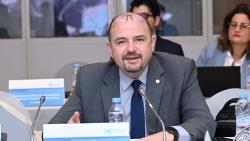
Opening the summit, Hanan Morsy, Deputy Executive Secretary (Programme) and Chief Economist of ECA, highlighted the role of well-governed social security and pension institutions in meeting development financing needs while safeguarding contributors’ savings. Citing AFC estimates that capital pools across Africa exceed US$4 trillion, including more than US$1 trillion in pension and life insurance assets, Ms. Morsy called for stronger institutions, suitable investment instruments and bankable project pipelines to channel long-term savings into productive investments. “Africa is not without savings, but too little of its long-term capital is reaching bankable, development-enhancing assets,” she said. She stressed that mobilizing these resources must go hand in hand with protecting the trust of workers and retirees.
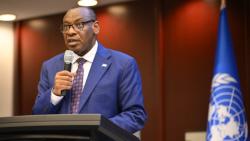
In his opening address, Eyob Tekalign, Governor of the National Bank of Ethiopia, emphasized the importance of mobilizing domestic resources to support development and strengthen economic resilience. He highlighted the role of social security systems in providing social protection, supporting productive investment and promoting long-term economic stability. Mr. Tekalign called for stronger institutions to support inclusive and sustainable development.
Discussions focused on mobilizing institutional capital for infrastructure development, strengthening regulatory frameworks and advancing cross-border investment. Participants examined the proposed ASSA Infrastructure Fund, which is intended to mobilize African institutional capital for infrastructure and other productive investments. They also discussed the potential roles of AFC, the TDB Group, the African Development Bank Group and the African Union in supporting the initiative.
On the margins of the summit, AUDA-NEPAD and ASSA signed a memorandum of understanding to strengthen cooperation on mobilizing African domestic institutional capital for infrastructure development. Signed by Nardos Bekele-Thomas, Chief Executive Officer of AUDA-NEPAD, and Meshach Bandawe, Secretary General of ASSA, the agreement provides a framework for collaboration on the proposed ASSA Infrastructure Fund. It aims to channel long-term pension and social security savings into infrastructure investments aligned with Agenda 2063. Building on a declaration of intent announced in 2025, the partnership seeks to support the development of a pipeline of bankable infrastructure projects across the continent.
Admassu Tadesse, President and Group Managing Director of the TDB Group, emphasized the need for closer collaboration between development finance institutions and African institutional investors. He noted that bankable projects, effective risk-mitigation mechanisms and suitable investment opportunities were essential to attracting long-term institutional financing. Mr. Tadesse also highlighted the role of African multilateral development banks in mobilizing domestic resources for infrastructure and economic transformation.
Participants also discussed ways to strengthen social security systems and expand social protection across Africa. They examined approaches to extending coverage to workers in the informal sector through demand-driven benefits and digital platforms, improving administrative efficiency through technological innovation, and advancing employment injury protection and universal health coverage. They exchanged experiences on governance, data management and service delivery.
The summit adopted resolutions to mobilize long-term institutional capital for infrastructure, harmonize regulatory and investment frameworks, expand inclusive social protection and strengthen implementation and follow-up, while safeguarding members’ contributions and upholding fiduciary obligations.
To translate these resolutions into action, participants called for closer cooperation among governments, regulators, social security institutions, development finance institutions and regional organizations to advance Africa’s development priorities.
Issued by:
Communications Section
Economic Commission for Africa
PO Box 3001
Addis Ababa
Ethiopia
Tel: +251 11 551 5826
E-mail: eca-info@un.org