
Context and Background
The Republic of Seychelles, a Small Island Developing State, “Large Ocean State” and an African Island State, comprising 115 islands, faces acute structural vulnerability to climate change. Rising sea levels, ocean acidification, coastal erosion and extreme weather threaten its economy, coastal infrastructure, marine ecosystems and human settlements.
Despite its high-income status and leadership in conservation and Blue Economy innovation, Seychelles continues to face barriers to predictable climate finance and institutional fragmentation between disaster risk management (DRM) and climate change adaptation (CCA).
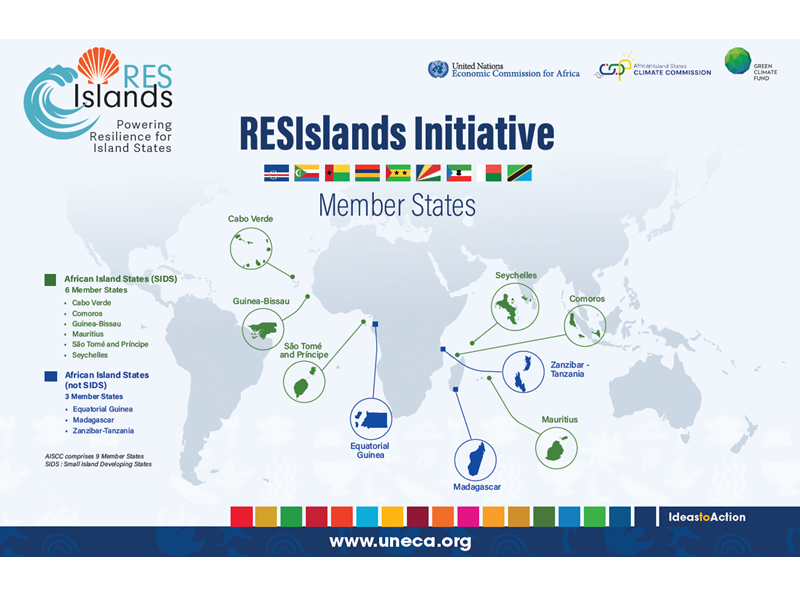
To close these gaps, the United Nations Economic Commission for Africa (UNECA), in partnership with the African Island States Climate Commission (AISCC) and backed by a US$4.943 million Green Climate Fund (GCF) Readiness grant, is delivering the RESIslands Initiative across nine African island nations: strengthening institutional readiness, multi-hazard risk assessment and bankable project pipelines.
Project Objectives
The Seychelles national implementation aims to strengthen integrated climate risk management and resilience-building capacity, through:
- Institutional coherence: strengthening national policy coherence and coordination between DRM and CCA frameworks.
- Better risk information: improving multi-hazard risk assessment, maritime data collection, and cross-agency information sharing.
- Finance-ready pipelines: developing robust project pipelines and strategies to unlock international climate finance.
- Sustained capacity: enhancing technical expertise through national and academic partnerships.
Institutional Arrangements and Stakeholders
Delivery rests on a whole-of-government, multi-stakeholder approach:
- National Designated Authority (NDA): Ministry of Environment, Climate, Energy and Natural Resources - overall strategic oversight and project alignment.
- Executing Agencies: Disaster Risk Management Department (DRDM) and other relevant departments - DRR coordination and operational implementation.
- Key Government Partners: Economic Planning Department, Seychelles Meteorological Authority; Ministry of Local Government; land-use planning authorities and maritime/ ocean management agencies.
- Specialized Operators and Academia: University of Twente's Faculty of Geo-Information Science and Earth Observation (UT-ITC), UNECA, AISCC (technical training and capacity development).
- International Partners: UNECA (Delivery Partner) and the Green Climate Fund (Funder).
Expected Outcomes
- Streamlined, harmonized national disaster risk management and climate adaptation frameworks.
- A standardized, centralized national risk database improving forecasting and decision-making.
- Enhanced technical competency among national experts and reinforced institutional retention.
- A robust pipeline of climate-resilient investment projects ready for GCF and international climate financing.
Event Documents